
Silogism is a form of reasoning where conclusions are drawn from two premises. It is a fundamental component of logical and critical thinking, crucial for problem-solving and decision-making. This article delves into the nuances of silogism, its historical significance, and its contemporary application in various fields including mathematics, philosophy, and artificial intelligence.
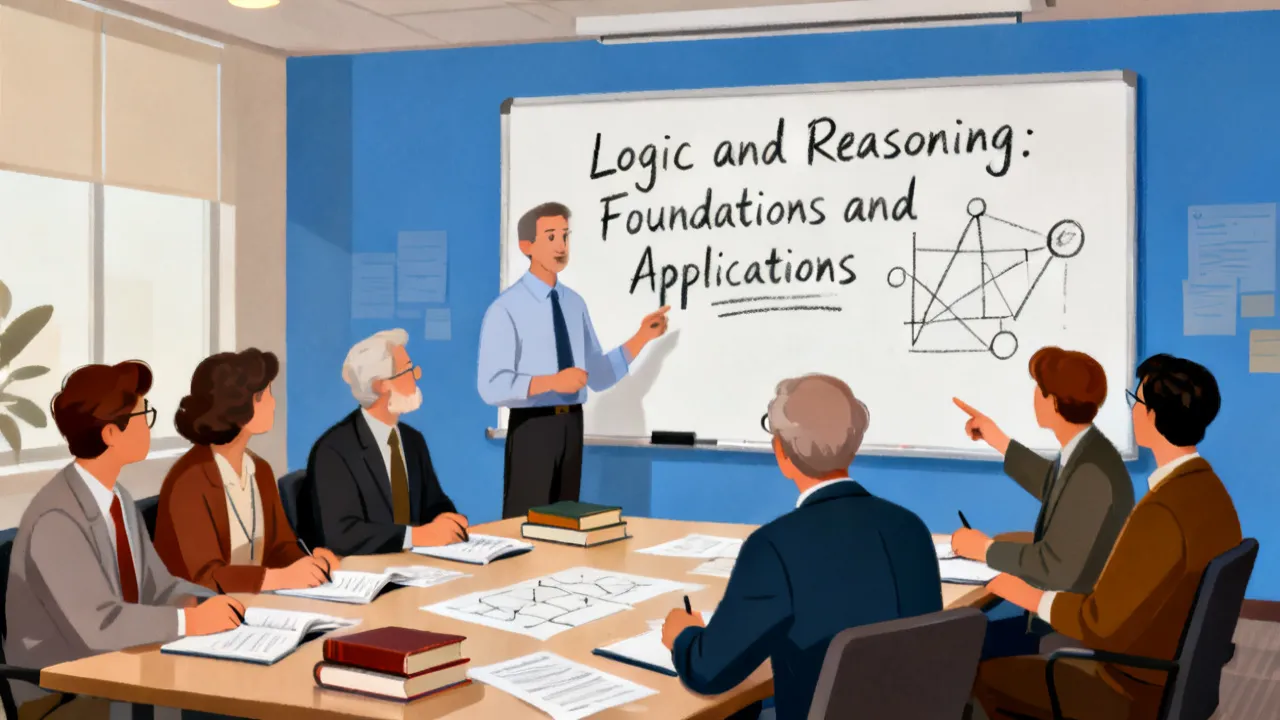
Silogism is the cornerstone of logical reasoning, dating back to the era of Aristotle. As a deductive reasoning tool, it employs syllogistic patterns to derive conclusions from two premises, typically a major and a minor one. The importance of silogism transcends mere academic interest; it serves as a foundation for structured thinking and decision-making across various domains. Its use is prevalent in various disciplines, fostering critical thinking and analytical skills crucial not only in academic environments but also in everyday reasoning. Understanding silogism enhances one’s capacity to evaluate arguments critically, identify logical fallacies, and construct coherent narratives.
A silogism is traditionally structured in three parts: two premises followed by a conclusion. The major premise presents a general statement, the minor premise introduces a specific instance, and the conclusion combines these elements to form a logical deduction. For example:
This classical structure underpins a wide variety of logical constructs used in philosophical arguments as well as in algorithmic design. Additionally, it is essential to recognize that silogisms can take various forms, and the nuances in their construction can influence the quality of the argument presented. Ensuring clear definitions and logical coherence in both premises is critical to arriving at a valid conclusion. Moreover, understanding the explicit relationships between the premises and the conclusion is integral to utilizing silogistic reasoning effectively.
The concept of silogism has its roots in ancient Greek philosophy, particularly in the work of Aristotle, who formalized its principles in his "Prior Analytics." Aristotle’s syllogistic theory laid a foundation for what would become the standard of formal logic for centuries. The Aristotelian logic, foundational to the development of Western philosophy, equipped scholars with tools to engage in rigorous analysis of arguments, promoting clarity amid the complexity of philosophical discourse.
Following Aristotle, numerous thinkers contributed to the evolution of logical theory. Immanuel Kant, for instance, challenged some Aristotelian concepts and introduced the idea that knowledge includes both a priori and a posteriori elements. George Boole took these ideas further, employing algebraic principles in logic that reshaped the discipline into what we recognize today as Boolean algebra. This evolution illustrates a pivotal shift from purely philosophical debates to applying logical frameworks to mathematical reasoning and beyond.
The examination of these historical developments reveals how the evolution of silogistic reasoning has influenced not just philosophy but also the methodology of scientific inquiry. Contemporary logical explorations owe much to the groundwork laid by these thinkers, demonstrating the enduring significance of silogism throughout history.
In contemporary settings, silogism is not only confined to academic discourses in philosophy but also finds applications in fields such as law, computer science, and artificial intelligence. For instance, in computer algorithms, logical reasoning is employed to build decision trees and inferencing mechanisms, drawing upon the age-old principles of silogism. In legal contexts, attorneys use silogistic reasoning to construct arguments that are clear, coherent, and backed by a logical framework, enabling them to persuade juries effectively. For example:
This application underscores how silogism can be instrumental in clarifying complex legal issues and supporting rational discourse in courtrooms.
In addition to its role in law, silogistic reasoning finds relevance in everyday communication. When individuals articulate their thoughts or feelings, constructing their arguments with foundational logical structures helps prevent miscommunication and ensures clarity in interpersonal exchanges. The impact of silogism in enhancing effective communication is profound, as it fosters a culture of rational discourse and helps quell potential misunderstandings.
Within AI, silogistic principles enhance machine learning models, contributing to their ability to reason and make predictions. By adopting frameworks inherited from logical deduction, AI systems improve their interpretative accuracy, thereby advancing fields like natural language processing and automated decision-making. For instance, AI applications in healthcare rely on logical models to diagnose conditions based on patient symptoms effectively. The integration of silogistic principles enables machines to reason through symptoms and arrive at logical conclusions that facilitate timely and accurate medical decisions.
The complexity and depth of AI systems benefit immensely from formal logic advancements. Some advanced AI systems incorporate modal logic—a type of logic that extends silogistic principles to include necessity and possibility—allowing machines to make decisions not just based on concrete data but also by considering potential outcomes and alternative scenarios. This ability to incorporate conditional reasoning significantly enhances the functionality of AI in personalized medicine, autonomous vehicles, and predictive analytics.
Moreover, AI tools that utilize logical reasoning can also play a critical role in cybersecurity, identifying threats by evaluating data patterns and deducing conclusions based on established regulations and threat models. The interplay between traditional logical reasoning and contemporary technological developments illustrates the continued relevance and adaptability of silogistic principles in modern innovation.
Despite its straightforward nature, misunderstandings about silogism can arise, often due to incorrect premises or flawed conclusions. It's crucial to distinguish between valid and invalid syllogisms, understanding that the validity of a conclusion hinges on the truth of its premises and logical coherence. For example, a syllogism may follow a correct logical form, but if the premises are inaccurate, the conclusion will inevitably be flawed:
This example illustrates that while the form is correct, the conclusion is logically unsound due to false premises. Misunderstandings of silogism often arise from superficial engagements with logical forms without a deeper examination of the content and context of arguments.
Furthermore, establishing the difference between deductive and inductive reasoning is vital for clarity. While silogism represents deductive reasoning, which leads to conclusively defined outcomes when premises are accurate, induction is based on observations where conclusions could be probable but not certainly true. Educating oneself about these distinctions enhances critical thinking and fosters better judgment in analyzing arguments encountered in everyday interactions.
| Type | Example | Description |
|---|---|---|
| Categorical | If A is B, and B is C, then A is C. | Involves affirmations about inclusions or exclusions among categories. |
| Disjunctive | Either A or B is true; A is false; therefore, B is true. | Employs an either/or framework to determine truthfulness among propositions. |
| Conditional | If A, then B; A occurs; therefore, B also occurs. | Involves conditional ("if-then") statements that link outcomes to specific conditions. |
| Hypothetical | If it rains, the ground will be wet. It is raining, thus the ground is wet. | Examines hypothetical situations and their resultant conclusions based on premise acceptance. |
| Combined Syllogism | All cats are mammals; all mammals are animals; thus, all cats are animals. | Integrates multiple syllogisms to reach a broader conclusion. |
Studying silogism enhances one's ability to engage in critical thinking and structured argumentation, vital in complex problem-solving. It educates individuals on how to formulate strong arguments and improves comprehension of the logical structure behind conclusions reported in media, politics, and academia.
Yes, the principles of silogism aid in decision-making processes in everyday life and enhance argumentation skills in professional settings. Whether negotiating terms, analyzing claims made in advertisements, or determining the validity of information encountered online, silogistic reasoning proves invaluable in various life scenarios.
Silogism is part of broader logical frameworks like propositional and predicate logic, which delve deeper into the relationships between assumptions and conclusions. Propositional logic focuses on the relationships between whole statements while predicate logic extends this concept to deal with predicates and quantifiers, showcasing the versatility of logic in articulating complex ideas.
Absolutely. A silogistic argument can have a valid form yet be fallacious if it relies on false premises. Thus, verifying the truth of the premises is as crucial as maintaining logical form.
Improving silogistic reasoning skills involves practice, engaging with logical puzzles, studying examples of both valid and invalid syllogisms, and participating in debates. This hands-on experience promotes the development of critical thinking abilities and refines one’s argumentative capacities.
Silogism represents a timeless element of reasoning that continues to be relevant across various domains. As we advance in fields like AI and cognitive sciences, understanding and applying the core principles of silogistic logic become increasingly crucial. By mastering these techniques, one cultivates sharper analytical skills and fosters a culture of logical inquiry that is integral to both personal and professional growth.
Moreover, as society increasingly relies on information and data to form opinions, the ability to discern valid arguments from fallacious ones is paramount. In a world where misinformation can spread rapidly, the ability to apply silogistic reasoning not only enhances individual understanding but also contributes to more informed and rational public discourse. Continued exploration and education in the art and science of silogism will undoubtedly yield benefits across academic fields, legislative processes, and everyday life, cultivating a population skilled in discerning truth from fallacy.
Lastly, the furtherance of silogistic reasoning in diverse areas such as neuroscience and behavioral analytics highlights its relevance in understanding how humans think, deduce, and make decisions. As we explore the intersection of logic and human cognition, we acknowledge the role of silogism as not only a tool for structuring arguments but also as a mirror reflecting the complexities of human thought itself, challenging us to remain vigilant and discerning in our pursuit of knowledge and understanding.