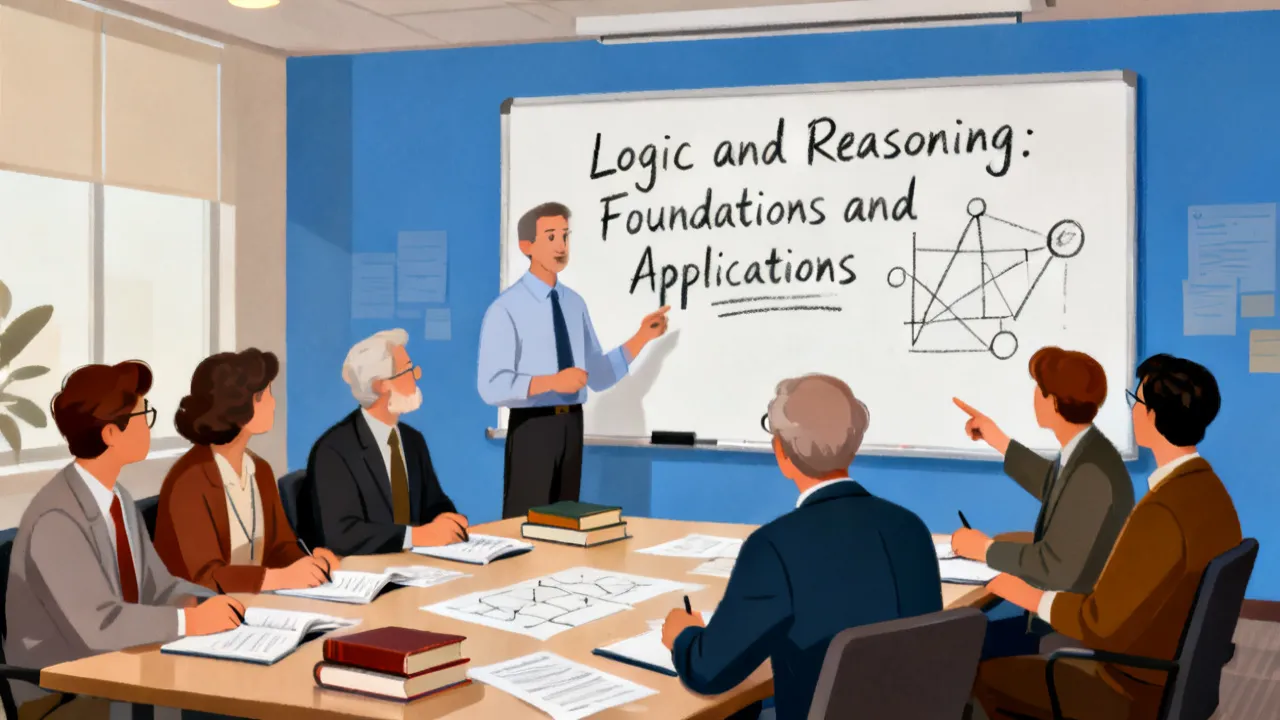
Syllogism represents a form of deductive reasoning, crucial in argumentation and logic, originating from Aristotelian principles. In this exploration, the concept of syllogism is dissected, shedding light on its application across various fields. This logical technique, predicated on drawing conclusions from two given premises, has been utilized in philosophical discourse and beyond for centuries.
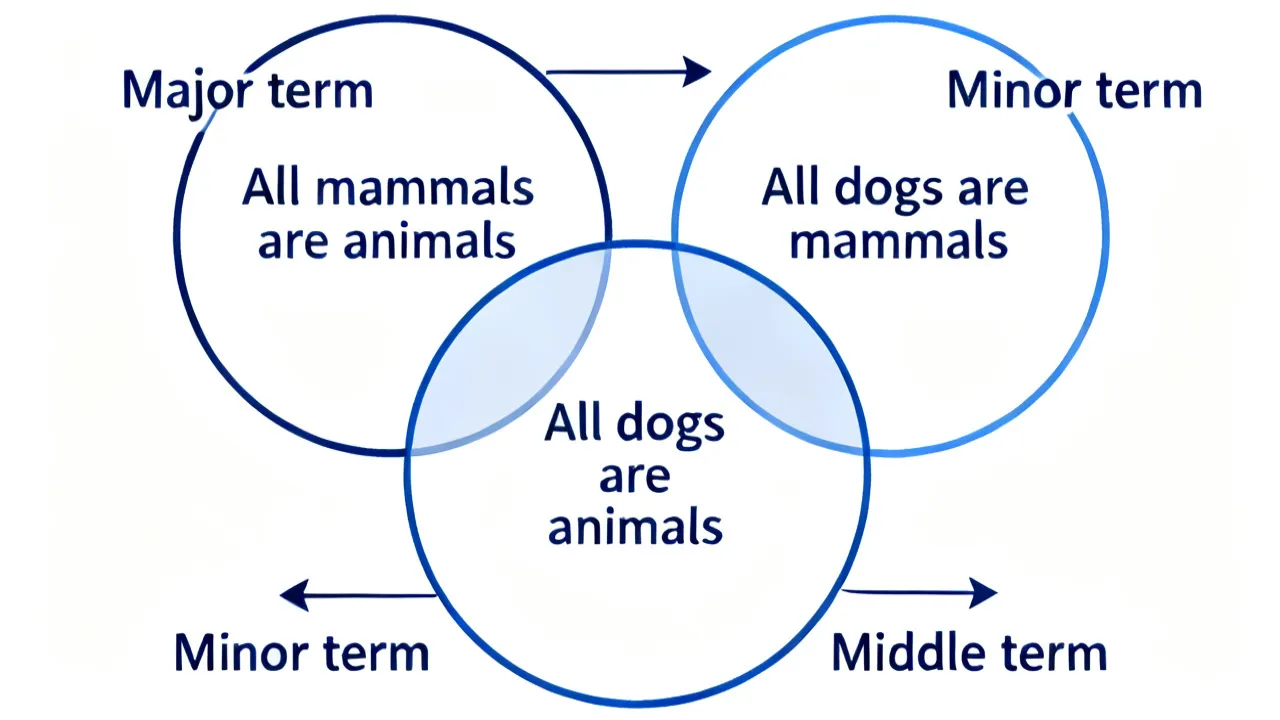
Syllogism is a fundamental concept in the field of logic, representing a form of deductive reasoning that has been instrumental in shaping philosophical discourse. Originating from the works of Aristotle, it involves drawing a conclusion from two given premises. This logical craft plays a vital role in the structuring of arguments, helping to ensure the soundness and validity of conclusions drawn. Aristotle’s exploration of syllogism laid the groundwork for subsequent developments in logical analysis, influencing countless scholars and thinkers throughout history. The significance of syllogism stretches far beyond academia; it permeates everyday reasoning, enhancing our ability to think critically and articulate our thoughts clearly and convincingly.
At its core, a syllogism comprises three parts: a major premise, a minor premise, and a conclusion. The classic example is the statement "All men are mortal (major premise), Socrates is a man (minor premise), therefore, Socrates is mortal (conclusion)." Here, the general principle that 'all men are mortal' is applied to a specific instance, leading to a logical conclusion. Understanding the anatomy of a syllogism is crucial for anyone interested in logical reasoning, as it provides a clear framework for constructing valid arguments. Each part serves a distinct function in the logical sequence, allowing for a systematic exploration of knowledge and ideas.
Syllogisms serve as an essential tool in the realm of logic and philosophy, facilitating structured arguments and aiding in the evaluation of their validity. The practice of logical consistency is pivotal in fields such as law, mathematics, and computer science, where structured reasoning is vital. Through the application of syllogistic reasoning, individuals can weave complex arguments with clarity and precision. This structured approach enables scholars and thinkers to identify weaknesses in arguments, refine their thoughts, and present viewpoints that withstand scrutiny. Whether one is advocating for a position in a debate or drawing conclusions from observations in scientific research, mastering syllogism can significantly enhance the robustness of reasoning.
Syllogisms are generally classified into different types based on the nature of the premises involved. These include categorical syllogisms, wherein the premises express a categorical proposition, and hypothetical syllogisms, which involve conditional statements. Understanding these categories is crucial for those looking to delve deeper into logical theories and their applications. For example, categorical syllogisms are typically identified by their structure and the types of propositions they employ, reflecting universal or particular affirmations or negations. On the other hand, hypothetical syllogisms are particularly useful in the realms of conditional reasoning, helping to analyze scenarios that depend on certain conditions being met.
| Syllogism Type | Description |
|---|---|
| Categorical Syllogism | Involves two categorical propositions as premises and one as a conclusion. |
| Hypothetical Syllogism | Based on conditional (“if-then”) statements as premises. |
| Disjunctive Syllogism | Employs a choice or disjunction among its premises. |
| Polysyllogism | Extends the basic syllogism structure, allowing for multiple premises and conclusions. |
| Constructive Syllogism | Combines multiple syllogistic arguments to arrive at a conclusion. |
Throughout the ages, syllogism has found its place in numerous fields. In philosophy, it is fundamental to logical argumentation. Philosophers employ syllogistic reasoning to dissect complex arguments, challenging assumptions and clarifying concepts. Lawyers employ syllogistic reasoning to build airtight cases, ensuring each argument follows logically with as few logical fallacies as possible. The critical evaluation of arguments within political debates also heavily relies on the principles of syllogism to persuade and inform the public. In everyday scenarios, individuals use syllogistic reasoning to make decisions based on a systematic analysis of information and evidence.
Moreover, syllogism is applied in academic writing, particularly in crafting research papers and essays, where a clear structure is paramount. Students learn to formulate their arguments using syllogistic principles, often engaging in debates or discussions where the ability to construct and deconstruct arguments is crucial. This application also extends to artificial intelligence and programming, where logical structures are used to enhance automated reasoning capabilities. Through these applications, syllogism serves as a bridge connecting theory with practical skills, empowering individuals to express themselves effectively.
Mistakes in syllogistic reasoning often stem from improperly structured premises or invalid analogies. A common error is the fallacy of the undistributed middle, where the middle term is not distributed at least once in the premises. This leads to faulty conclusions and misinterpretations of the relationship between the syllogism's components. For example, consider the erroneous syllogism: “All cats are animals, and all dogs are animals; therefore, all cats are dogs.” In this case, the faulty reasoning arises from the flawed assumption that sharing a common category implies direct equivalence between the specific cases, which is not necessarily true.
Another frequent mistake is known as affirming the consequent, a type of logical fallacy that occurs when one mistakenly assumes that if 'A' implies 'B', then 'B' must imply 'A'. This misstep can lead to incorrect conclusions, further underscoring the need for careful analysis in syllogistic reasoning. Interpreting premises accurately and ensuring they align logically is key to avoiding pitfalls associated with faulty reasoning. Awareness of these common mistakes aids in sharpening one’s reasoning and argumentation skills, enabling individuals to construct sound arguments and strengthen their critical thinking capabilities.
What distinguishes a sound syllogism from an unsound one?
A syllogism is sound if it is valid and its premises are true. An unsound syllogism suffers from either invalid structure or false premises. This distinction is crucial; a valid syllogism guarantees a logical conclusion based on true premises, while an unsound one can lead to erroneous conclusions even if its arguments are presented logically. The pursuit of sound syllogisms is vital in academic fields, judicial reasoning, and everyday decision-making, where clarity and correctness are paramount.
Can syllogism be applied to everyday situations?
Yes, syllogistic reasoning can be applied to everyday decision-making, helping to organize thoughts logically and make well-founded decisions. For instance, when deciding what to wear based on the weather, one might reason: “If it is raining (major premise), then I need an umbrella (minor premise); it is raining (minor premise); therefore, I will take an umbrella (conclusion).” This logical structure helps streamline decision-making processes and cultivate coherent arguments in daily discussions with friends or colleagues. The ability to construct simple syllogisms can foster clearer communication and a better understanding of interpersonal dynamics.
Are there variations of syllogisms beyond the traditional three-part structure?
Yes, variations like enthymemes exist, where one premise is not explicitly stated but implied, relevant in rhetoric and persuasive writing. Enthymemes often appeal to the audience's understanding and background knowledge, allowing speakers to communicate effectively without stating every detail. Another variation is the sorites or chain argument, which consists of a series of syllogisms linked together to reach a final conclusion. Enthymemes and chain arguments showcase the adaptability of syllogistic reasoning, enriching discourse in various fields by enabling nuanced discussions beyond straightforward logic.
Syllogism remains a powerful tool within logical reasoning, ensuring clarity and coherence in arguments across diverse disciplines. By understanding and applying the principles of syllogism, one can sharpen their analytical skills, enhancing both academic pursuits and everyday decision-making processes. The ability to dissect arguments, identify valid premises, and form sound conclusions is essential not only in scholarly activities but also in navigating life’s complexities and making informed choices. As individuals grow more adept at employing syllogistic reasoning, they contribute to a culture of critical thought and rational discourse. In a world teeming with information and diverse viewpoints, the mastery of logical reasoning serves as an anchor, guiding individuals towards well-reasoned conclusions and thoughtful discussions.
Moreover, the study of syllogism enriches one's appreciation of logic as a discipline. For students of philosophy, mathematics, and even literature, developing the skill to recognize and apply syllogistic structures deepens their engagement with the material. It acts as a tool for clarification in the complexity of theoretical concepts, ensuring that arguments withstand critical scrutiny and enhance intellectual dialogue. By nurturing these skills, syllogism advocates for rationality and systematic thought in an increasingly chaotic world.
As such, investing time in understanding syllogisms empowers individuals to elevate not only their academic and professional endeavors but also their personal interactions. In conversations, debates, and discussions, recognizing the underpinnings of logical arguments equips one to engage more meaningfully, advocate for their positions effectively, and foster a more intellectually stimulating environment. The practice extends beyond persuasion into fostering empathy; recognizing the structures of others’ arguments allows for thoughtful responses that acknowledge differing viewpoints while maintaining logical rigor.
In conclusion, syllogisms are foundational elements of logical reasoning that bear immense relevance in various aspects of life. By refining one's understanding of syllogistic reasoning, individuals cultivate a mindset conducive to critical thinking, informed dialogue, and effective problem-solving. This pursuit not only advances personal growth but also contributes to a more reasoned and enlightened society. As we navigate an age of information abundance, the ability to think logically and argue cogently remains a timeless and invaluable skill.