Uda Underperformance refers to a scenario where a company or segment of a business underachieves relative to expectations or industry standards. This analysis delves into the causes, impacts, and potential mitigations of underperformance, offering expert insights into enhancing organizational efficiency and setting realistic objectives to help firms optimize their operations and strategies.
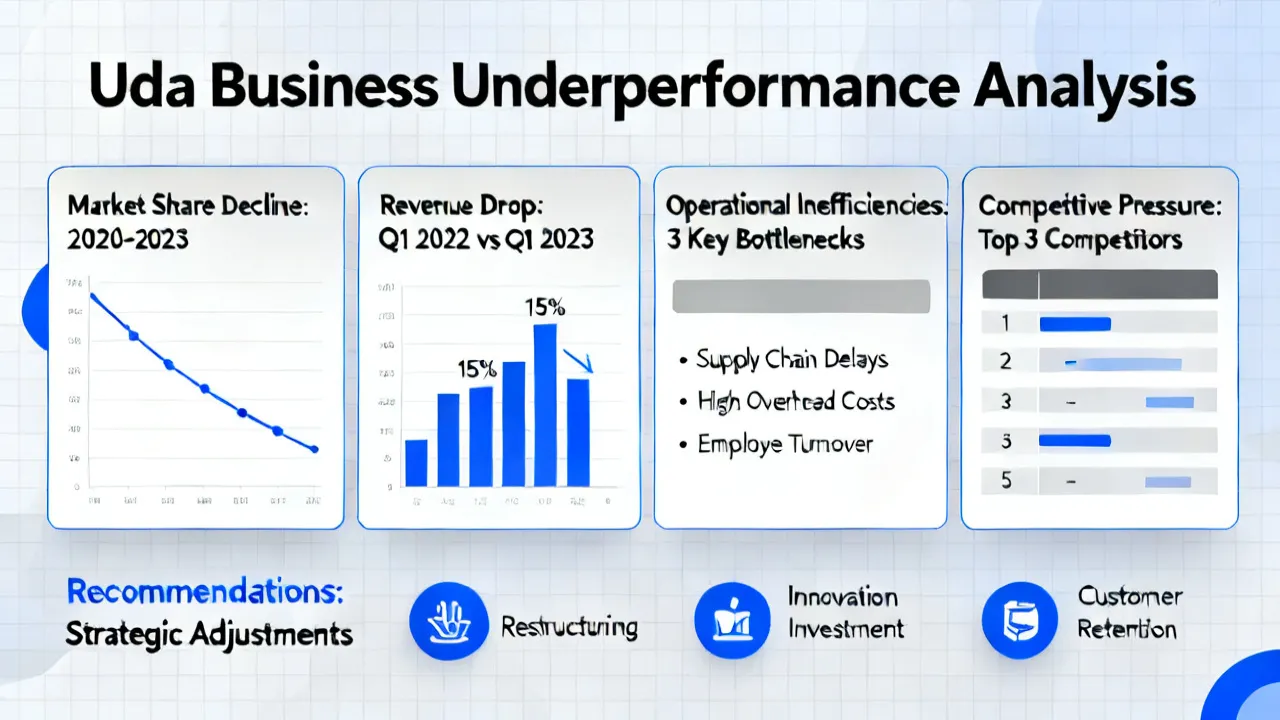
Uda Underperformance, a term frequently discussed in business and economics, denotes situations where outcomes do not meet the anticipated standards. This concept is pivotal in analyzing organizational health as it helps identify variances between expected and actual performance. Underperformance can be disheartening, but it also serves as an opportunity for introspection and recalibration for businesses. Recognizing and understanding this phenomenon lays the groundwork for effective interventions and strategies for improvement.
The term "Uda" may vary in significance across different sectors, with various interpretations. In some contexts, it might relate specifically to sales performance within a certain department or the overall profitability of a business unit. Ultimately, underperformance reflects a disconnect between desired results and reality, requiring a thorough investigation and tailored responses. Understanding Uda Underperformance is not just about numbers; it's also about the broader implications for staff morale, customer satisfaction, and market competitiveness.
There are various factors that might contribute to Uda Underperformance. These could range from internal inefficiencies, such as mismanagement or lack of resources, to external pressures like market volatility or economic downturns. Some key factors include:
Understanding these causes is crucial for leaders aiming to rectify issues and steer their businesses toward success. It is vital to conduct thorough analyses and obtain feedback from various stakeholders to appreciate the different dimensions that contribute to underperformance.
The ramifications of Uda Underperformance can be significant. They might include:
It’s imperative that organizations monitor their performance metrics closely to detect underperformance early and implement corrective measures swiftly. Early detection allows for timely interventions, thus minimizing damage and setting the path for recovery.
Several strategies could effectively address Uda Underperformance. These might involve:
Companies that actively seek to adapt and improve are often better positioned to overcome challenges. Each of these strategies comes with its own set of tactics and considerations that need to be adapted based on the specific context of the organization. The leaders must be prepared to be flexible and responsive, attentively monitoring the outcome of their adopted strategies.
| Step | Action |
|---|---|
| Identify | Analyze the metrics to detect areas and reasons for underperformance. Use both quantitative data and qualitative feedback to gain a comprehensive understanding. |
| Evaluate | Assess the impacts and prioritize which issues require immediate attention. Utilize methods like SWOT analysis to evaluate strengths, weaknesses, opportunities, and threats related to underperformance. |
| Plan | Develop a strategy focused on specific areas in need of improvement. Involve key stakeholders in the planning process to ensure buy-in and comprehensive insights. |
| Implement | Execute the plan with clearly defined goals and very reachable milestones. Communication during implementation is crucial to mitigate resistance and ensure alignment. |
| Review | Continuously monitor and review improvements to ensure objectives are met. Establish metrics for success and adjust strategies as needed based on feedback and results. |
Each step in this approach is interconnected; failure to properly execute any single step can undermine the overall improvement efforts. Additionally, engaging employees at every phase can lead to richer insights and foster a sense of ownership, which might enhance motivation and performance.
What is Uda Underperformance?
Uda Underperformance occurs when a business segment doesn’t meet its expected targets or benchmarks. This discrepancy raises important questions about strategy and execution that must be addressed for sustainable growth.
How can one measure underperformance?
Measurements can include financial metrics like ROI, productivity indicators, or market share analysis against competitor benchmarks. Beyond quantitative metrics, qualitative measures such as employee satisfaction and customer feedback can also provide insight into overall performance health.
What’s the first step to correcting underperformance?
The first step is identifying the root causes, which involves comprehensive data analysis and stakeholder consultations. By leveraging various data sources, businesses can more effectively pinpoint weaknesses and areas for improvement.
Can restructuring help mitigate underperformance?
Yes, restructuring can realign resources, introduce new management philosophies, and foster innovation, contributing to performance enhancements. However, restructuring should be approached carefully to avoid disruption and disengagement among employees.
While addressing current underperformance is crucial, implementing long-term strategies can help prevent similar issues in the future. Here are some strategies that organizations can adopt:
Examining real-world examples of Uda Underperformance can shed light on how various organizations have navigated challenges and implemented corrective actions. Here are a few illustrative case studies:
A tech start-up initially experienced rapid growth but soon faced declining user engagement. Investigative measures revealed that their software had become outdated compared to competitors, lacking crucial features. The leadership restructured their development teams and initiated collaborative brainstorming sessions with employees to innovate, leading to a successful software upgrade. Post-implementation results showcased a 35% increase in daily active users within three months.
A well-known retail chain found itself losing market share due to poor sales performance in several locations. Analysis indicated an operational issue: managers were not consistently implementing the company’s sales strategies. The company decided to conduct a comprehensive training program for all management levels to instill necessary skills and knowledge. Following this initiative, the chain saw a 15% increase in sales within six months, successfully reclaiming its position in the market.
A manufacturing firm reported declining profitability due to rising operational costs and inefficiencies in its production line. A diagnostic study indicated a need for investment in technology and re-engineering processes. The management team initiated a project to upgrade machinery and conducted skill enhancement workshops for employees to increase efficiency. Within one year, the firm reported a 20% decrease in production costs and an increase in profit margins.
Understanding and addressing Uda Underperformance is critical for any business aiming to thrive in a competitive marketplace. By comprehensively analyzing and tackling the factors contributing to underperformance, businesses can convert challenges into opportunities for growth and success. Emphasis should be placed on a proactive approach to performance management, ensuring continual adaptation and improvement.
Moreover, organizations need to remember that addressing underperformance is not merely about fixing immediate issues. It’s about instilling a long-term culture of excellence where continuous improvement is valued and pursued relentlessly. This culture creates an environment that allows businesses to thrive even during tumultuous times, fully realizing their potential.
In conclusion, the journey to overcome Uda Underperformance involves not only identifying and correcting the discrepancies but also fostering an organizational ethos that champions performance excellence. Organizations willing to commit to these strategies often find themselves better equipped for sustained success.